
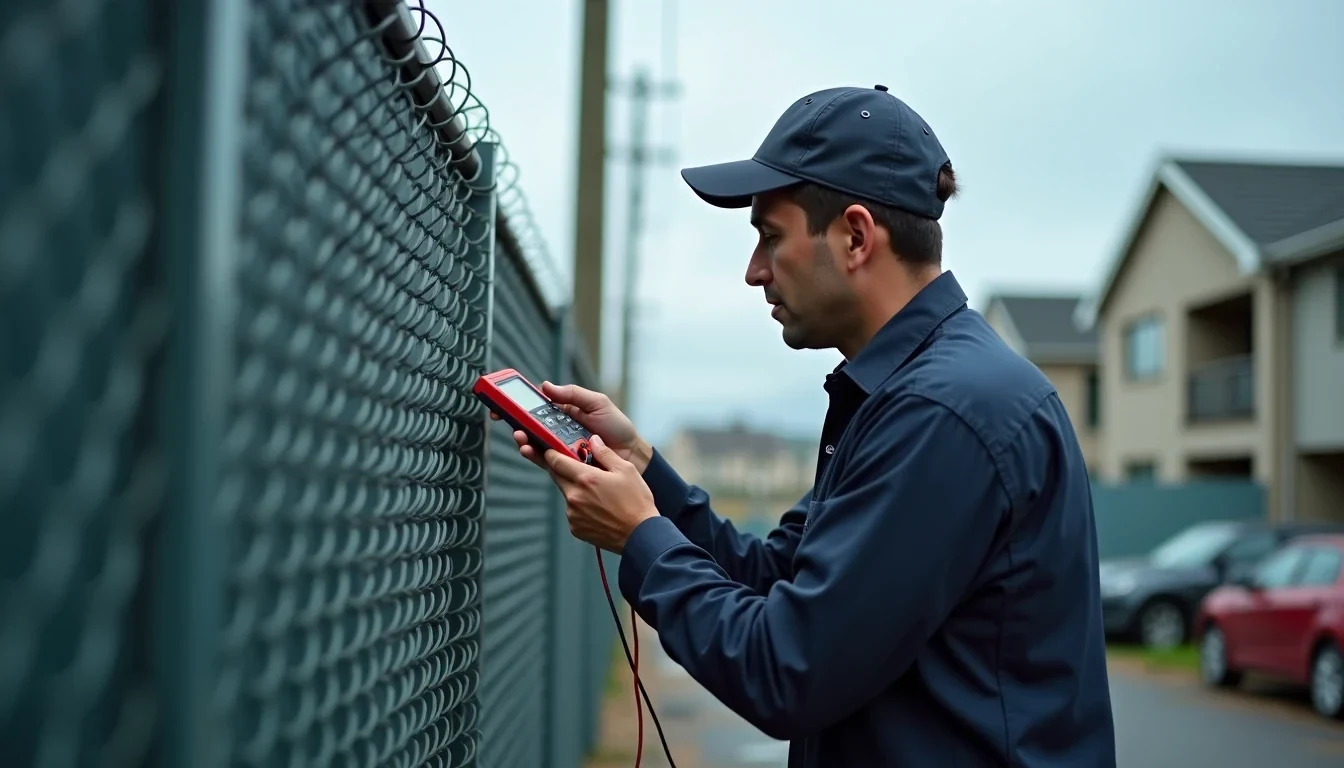
The gate opens every evening at the same speed, and residents assume the motor is healthy. That assumption creates liability. A security system that moves, beeps, or blinks on schedule tells you almost nothing about whether it will perform when someone tests it at 2 am. For trustees and managing agents already stretched thin, the real danger is not the obvious breakdown. It is the quiet one, the fault that accumulates for months until a breach or injury makes it visible and expensive.
The gap between looking right and being right
Volunteer trustees sign for infrastructure they rarely understand. They inherit electric fences, CCTV networks, intercoms, and gate motors from previous boards or developers, then hope the installer who set them up remains reachable when something fails. Most installers do not. The result is a patchwork of reactive repairs where fault discovery depends on resident complaints or, worse, the moment a criminal finds the weak point first.
An electric fence can carry voltage at the energizer and lose pulse strength three zones away. A CCTV camera can stream a live feed while its NVR stopped recording weeks earlier. A gate motor can open and close while its safety beams are misaligned, creating liability for vehicle damage or pedestrian injury. None of these conditions announce themselves to an untrained eye. The Sectional Titles Schemes Management Act places maintenance of common property squarely on the body corporate, and trustees who cannot demonstrate due diligence face personal exposure when systems fail.
Insurance denials compound the damage. Insurers investigating a claim after a break-in will ask for maintenance records. An invoice for an emergency repair six months prior proves only that something broke once. It does not establish systematic care. Without verified documentation of regular checks, the operator has little defense against a finding of negligence.
What planned maintenance actually covers
Bi-monthly visits from a competent provider move beyond visual inspection into functional verification. For electric fences, this means testing voltage and pulse across every zone, not just at the source. Technicians tension slack strands before they sag into contact with vegetation or metal, inspect insulators for cracks that cause current leakage, and confirm that physical alarm links to armed response and gate sirens remain intact. Gate and boom servicing includes motor oil checks, bearing and roller greasing, track debris removal, and structural rust treatment before corrosion compromises integrity. CCTV work covers lens and weather shield cleaning, night-vision clarity verification, and confirmation that NVR recording and remote viewing function correctly. Intercom and access control checks cover power supply stability, wiring continuity, reader interface cleaning, and user database management to ensure departed residents no longer hold active credentials.
This level of detail requires specific credentials. A provider maintaining electric fences must hold registration with the Department of Employment and Labour as an electric fence installer. Manufacturer certifications, such as Centurion Trained SMART Installer status, confirm hands-on competence with the hardware actually installed on the property. Genuine compliance certificates and a workmanship guarantee, typically 24 months, separate accountable operators from fly-by-night repair services.
From emergency invoices to fixed budgeting
The financial contrast between reactive and proactive models is severe enough to reshape a scheme’s annual budget. Reactive maintenance produces surprise emergency invoices, often at premium rates because the trustee has no leverage when the gate is stuck open during rush hour. Quotes arrive under pressure, with no time for competitive comparison. The cost lands unpredictably, sometimes requiring special levies that inflame resident relations.
A fixed-fee service level agreement converts this chaos into a single predictable monthly line item, typically incorporated into existing levies. The standard structure specifies a 12-month commitment with two planned maintenance visits monthly plus two office-hours emergency call-outs included. Parts required beyond normal wear items are quoted in advance and in writing, eliminating the shock of unbudgeted expenditure.
More importantly, the SLA transfers operational risk. The provider owns the schedule, the expertise, and the documentation. The trustee owns the relationship and the audit trail, not the technical burden of diagnosing why zone four on the perimeter fence shows intermittent voltage drop.
The documentation that protects you
Every planned visit generates a verified Job Card recording what was checked, what was found, and what was done. These documents accumulate into a compliance file that serves a purpose no emergency invoice can match. They demonstrate systematic attention to security infrastructure over time, which is exactly what insurers, the Community Schemes Ombud Service, and aggrieved residents demand when something goes wrong.
Reactive maintenance leaves operators with repair invoices. Proactive maintenance leaves them with proof. The difference determines whether a trustee spends six months defending personal liability or closes the file with a single submission to the insurer.
Choosing the transfer over the gamble
The shift from reactive call-outs to structured maintenance is not primarily about convenience. It is about recognizing that trustees are not technicians, that silent failures outnumber obvious ones, and that liability attaches to the gap between assumed function and verified performance. Property operators who maintain security maintenance contracts for complexes, estates and businesses gain continuous system integrity rather than intermittent hope. Providers such as One Point security installers in Johannesburg offer the fixed-fee model and credential verification that transfers risk from volunteers who cannot bear it to specialists who are equipped to manage it. The question is not whether maintenance costs money. It is whether the scheme pays predictably for prevention or unpredictably for the consequences of neglect.